

As a dedicated supplier of Subgrade Stabilizers, I'm often asked a critical question by clients in various regions: "Can a subgrade stabilizer be used in cold climates?" This query is of utmost importance because cold climates present unique challenges that can significantly impact the performance of subgrade stabilizers. In this blog post, I'll delve into the science behind subgrade stabilizers, analyze their suitability for cold - climate applications, and provide insights based on our extensive industry experience.
Understanding Subgrade Stabilizers
Subgrade stabilizers are chemical or mechanical agents designed to improve the engineering properties of soil, which serves as the foundation for various construction projects such as roads, railways, and building foundations. They work by binding soil particles together, increasing the soil's strength, reducing its compressibility, and enhancing its durability. There are different types of subgrade stabilizers available in the market, including Soil Binders Products, which are often used to hold soil particles in place, and Slope Soil Stabilizer, which are specifically tailored for stabilizing slopes.
Subgrade stabilizers offer several benefits for construction projects. They can reduce construction costs by minimizing the need for expensive soil replacement. They also improve the long - term performance of the subgrade, leading to fewer maintenance requirements over the life of the project. Moreover, they can enhance the environmental sustainability of construction by reducing the amount of soil excavation and transportation.
Challenges in Cold Climates
Cold climates bring a set of challenges that can affect the performance of subgrade stabilizers. One of the most significant issues is frost heave. Frost heave occurs when water in the soil freezes and expands, causing the soil to lift and deform. This can lead to cracks in the pavement or foundation above the subgrade, compromising the integrity of the entire structure.
Another challenge is the low temperature itself. Many chemical reactions that are involved in the stabilization process are temperature - dependent. At low temperatures, these reactions may slow down or even stop altogether, preventing the stabilizer from achieving its full potential. Additionally, freezing and thawing cycles can cause the soil to expand and contract repeatedly, which can break the bonds formed by the stabilizer and undermine its effectiveness.
Compatibility of Subgrade Stabilizers with Cold Climates
Despite the challenges, subgrade stabilizers can indeed be used in cold climates, but careful selection and proper application are crucial. Some modern subgrade stabilizers are formulated to withstand low temperatures. These stabilizers are designed to have a faster reaction rate and greater resistance to freezing and thawing cycles.
Our Subgrade Stabilizer is one such product. It contains additives that are specifically engineered to work at low temperatures. These additives accelerate the chemical reactions involved in the stabilization process, ensuring that the soil gains strength even in cold conditions. Moreover, the structure of the stabilizer is designed to resist the stresses caused by freeze - thaw cycles, maintaining the integrity of the soil - stabilizer matrix.
Case Studies
Let's look at some real - world examples to illustrate the effectiveness of subgrade stabilizers in cold climates. In a recent construction project in a northern region with harsh winters, a local road - building company was facing challenges with a soft and unstable subgrade. Traditional methods of soil replacement were not only expensive but also time - consuming.
The company decided to use our subgrade stabilizer. Before application, the soil was thoroughly tested to determine its properties. Based on the test results, the appropriate dosage of the stabilizer was calculated. The stabilizer was then mixed with the soil using specialized equipment.
Despite the cold temperatures during the construction period, the subgrade showed significant improvement in strength and stability. After the road was completed, it was monitored over several freeze - thaw cycles. There were minimal signs of cracking or deformation, indicating that the subgrade stabilizer had effectively withstood the harsh cold - climate conditions.
Factors to Consider for Cold - Climate Applications
When using a subgrade stabilizer in cold climates, several factors need to be considered. First, the soil type plays a crucial role. Different soils have different moisture contents, particle sizes, and mineral compositions, which can affect the performance of the stabilizer. For example, fine - grained soils are more prone to frost heave than coarse - grained soils, and the stabilizer may need to be adjusted accordingly.
Second, the timing of application is essential. It's best to apply the stabilizer during the warmest part of the year, if possible, to allow the chemical reactions to proceed at an optimal rate. However, if construction must take place in cold weather, proper insulation and heating measures can be used to maintain the temperature of the soil - stabilizer mixture.

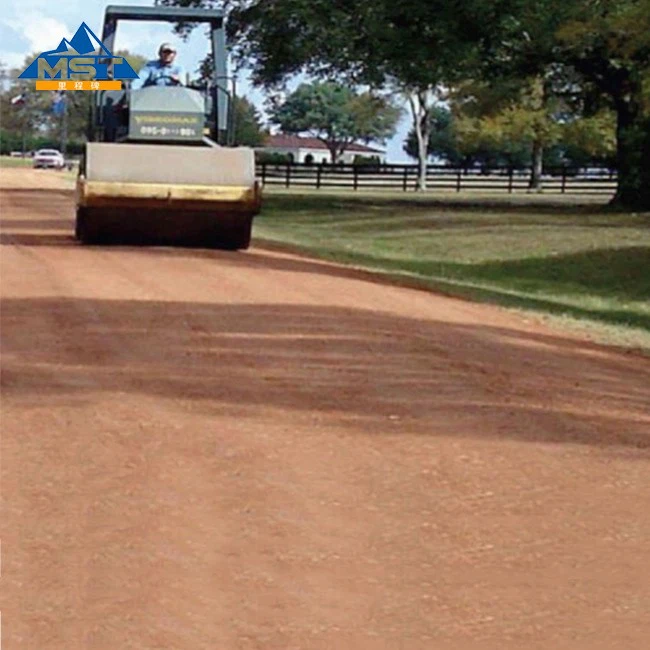
Third, the dosage of the stabilizer needs to be carefully calculated. In cold climates, a higher dosage may be required to compensate for the slower reaction rates and the increased stresses caused by freezing and thawing.
Maintenance and Monitoring
Even after a subgrade stabilizer has been successfully applied in a cold - climate environment, regular maintenance and monitoring are necessary. Visual inspections should be carried out periodically to check for signs of damage, such as cracks or displacement. In addition, soil testing can be done to assess the long - term stability of the subgrade.
If any issues are detected, prompt action should be taken. This may involve applying additional stabilizer, repairing the affected areas, or implementing measures to reduce the impact of frost heave, such as installing drainage systems.
Conclusion
In conclusion, while cold climates pose significant challenges for subgrade stabilizer applications, with the right product, proper application techniques, and effective maintenance strategies, it is entirely possible to use subgrade stabilizers successfully in these regions. Our Subgrade Stabilizer has been proven to deliver excellent results even in the harshest cold - climate conditions.
If you're involved in a construction project in a cold - climate area and are considering using a subgrade stabilizer, I encourage you to reach out to us. We have a team of experts who can provide you with detailed information, conduct soil testing, and help you select the most appropriate solution for your project. Contact us today to start a conversation about how our subgrade stabilizers can meet your needs and ensure the long - term success of your construction project.
References
- ASTM International. (Year). Standard Test Methods for Soil and Rock. ASTM.
- Holtz, R. D., & Kovacs, W. D. (1981). An Introduction to Geotechnical Engineering. Prentice - Hall.
- Mitchell, J. K. (1993). Fundamentals of Soil Behavior. Wiley.