

A soil stabilizer is an additive added to soil that, upon mixing, triggers a series of physical and chemical reactions with the soil. These reactions improve the soil's physical and mechanical properties, enhance its engineering characteristics, reduce water sensitivity, and increase water stability, ultimately rendering the soil into a firm and long‑lasting stabilized soil.

What is the construction procedure for soil stabilizer?
1. open the soil
Use plows or excavators to excavate the road to the required design depth(20-30 cm for rural roads, 30 cm for heavy vehicles), and use a soil mixer to crush the soil clods; .
2.Dilution Stabilizer
The product is diluted with water and mixed evenly, which can be done in the sprinkler. Under normal circumstances, add water according to the ratio of 1: 3-5, the actual dilution ratio can be adjusted to make sure the final moisture of soil is 13-15% .
3.Spray Stabilizer
Use a sprinkler to evenly spray a diluted aqueous soil stabilizer solution onto the plowed soil.
4.Mixing the Product
Immediately after spraying, mix thoroughly with a soil mixer so that the product con- tacts the soil evenly, two mixing sessions are recommended.
Two mixing sessions are required to ensure thorough even blending of the solution with soil for optimal performance.
5.Road Shaping
Shape the road by leveling the soil according to the design parameters. If drainage is to be considered, the road can be high in the center and low on both sides.
6. compact the soil
Compact within 15 minutes of spraying the product. Compaction shall be finished within 15 minutes so as to achieve better soil-stabilization performance.
Use bulldozers for initial leveling and compaction first, and for local low spots use soil mixed with stabiliz- er for leveling. After leveling, it is recommended to use a ramshorn roller to compact first, and then use a vibratory roller to compact. The type of roller and the number of rolling passes depend on the site conditions, and the ultimate goal is to achieve the maximum compaction density and the maximum CBR value.
7.Sealed Waterproofing
Spray a diluted stabilizer over the surface of the compacted roadway (not a necessary step, depending on site conditions
Completed Project References:
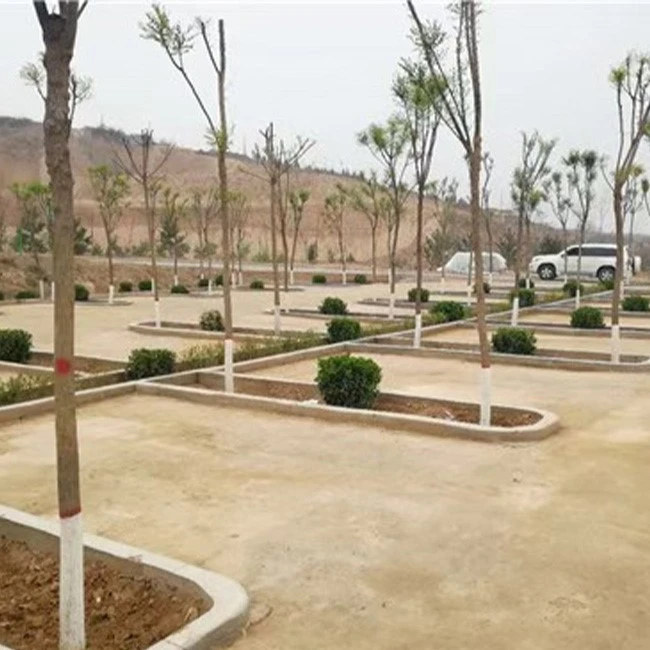
This is a soil-stabilization case for an open-air parking lot. Actual on-site construction took only 2-3 days. Compared with the conventional method of excavation and crushed-rock backfilling, it cuts 3-5 working days off the schedule and boosts construction efficiency by 45-55%.
It delivers 28-35% overall cost savings versus cement-stabilization solutions. When compared to the traditional lime plus crushed-rock replacement approach, total project costs can be reduced by 40-50%.
Key advantages: No soil excavation and off-site haul-away required. There is no waiting time for aggregate deliveries. The existing in-situ soil is treated directly on site, eliminating cycles for soil disposal and fill-material procurement & transportation.
Upon completion, the bearing capacity increases by 40%, supporting heavy-duty loads of 80-100 tons.
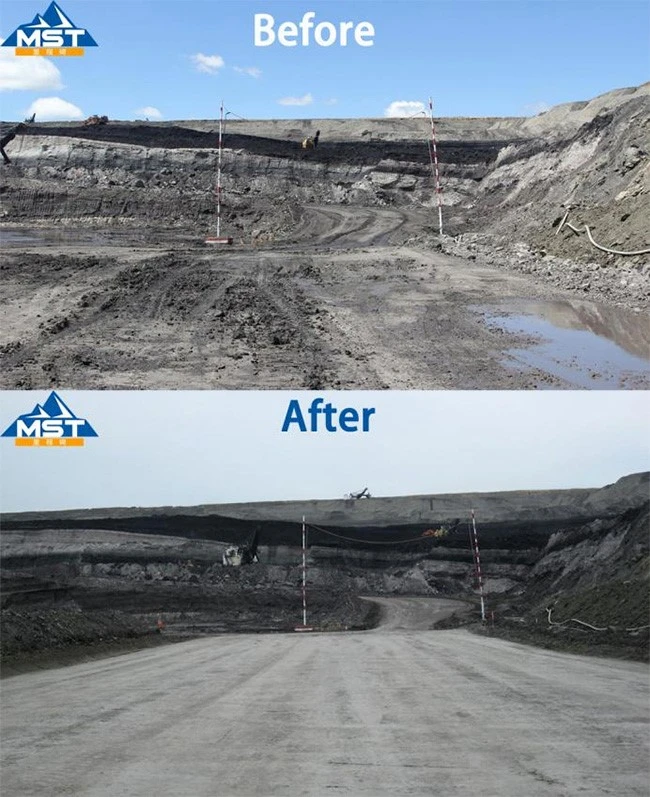
This haul road at the coal mine was built on soft, high-moisture silty clay. Before improvement, the surface turned muddy and held standing water, causing heavy mine trucks to get stuck easily.
After treatment with soil stabilizer, the road's bearing capacity improved significantly, making it suitable for heavy-duty mine truck traffic.The stabilizer application rate is 0.5 kg per square metre, mixed thoroughly into soil to a depth of 20 cm before compaction.
Compared with cement stabilization, overall project costs are cut by 30%. The construction schedule is shortened by 4-5 working days, boosting work efficiency by 50%. There is no need to haul away muddy soil or wait for crushed-rock deliveries. The poor on-site soil is directly converted into a qualified heavy-load road base.
Upon completion, the bearing capacity increases by 35%, supporting heavy-duty loads of 80-100 tons.